

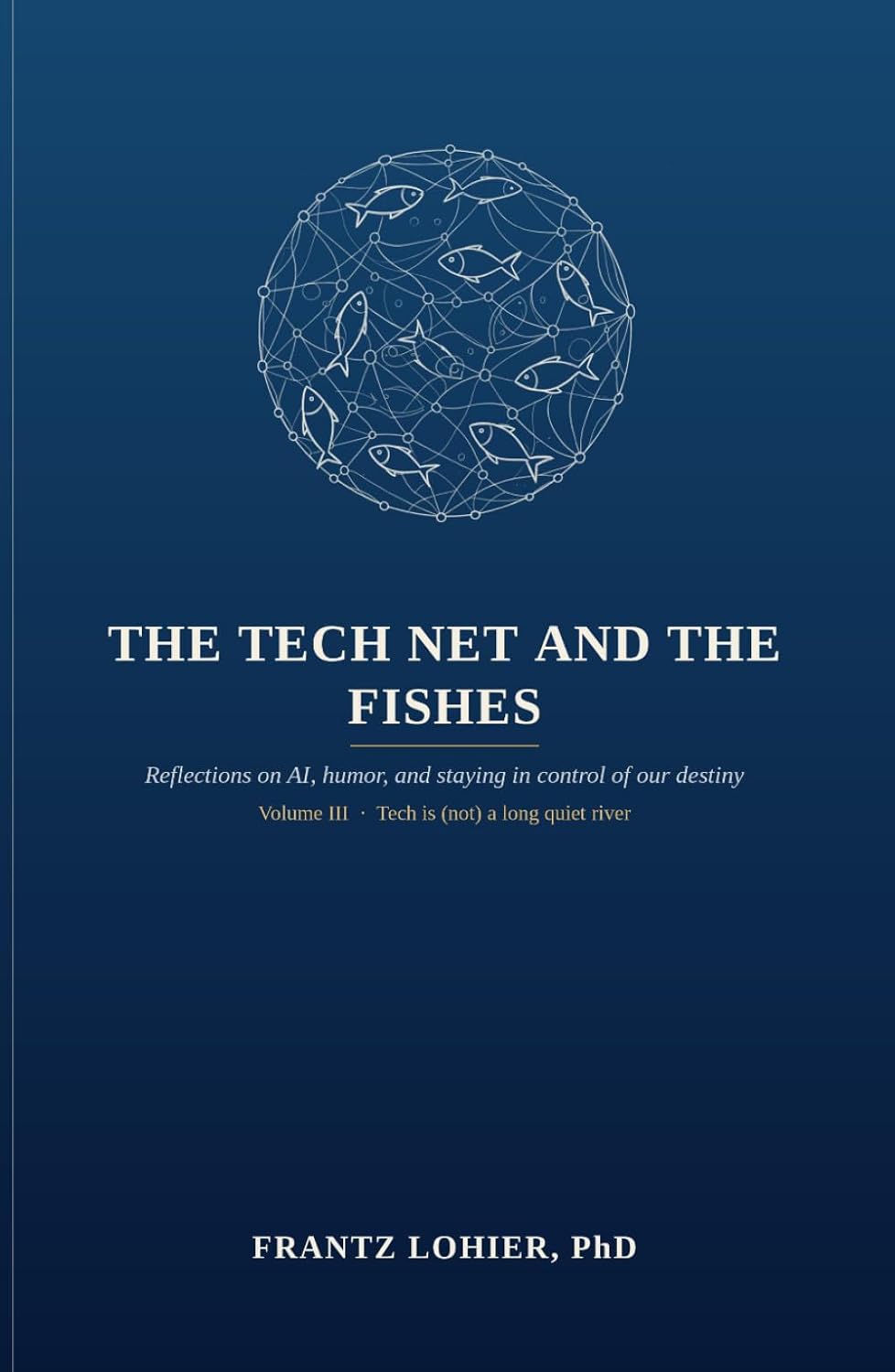
Three years ago I started writing about a simple, uncomfortable idea: that the technologies we build to bring us closer are, just as often, the net we get caught in. Two books later, I went looking for the smallest, most stubborn test of that idea I could find — and landed on the one thing everyone agrees machines can't really do. Make a specific person laugh.
So I spent two years building an AI humor company, dug back through twenty years of research into computational humor, and did something I don't think anyone has done in a book before: I put Claude and ChatGPT in a room, asked them what humor is, handed them real jokes to explain — and let them argue. With each other, and with me. Real transcripts. Models and dates on the record. No quiet editing of the answers I didn't like. The result is Volume III of the trilogy — The Tech Net and the Fishes.
What I actually found
Not the triumph the hype promises, and not the catastrophe the headlines prefer. Machines have come startlingly close to humor — recognizing it, personalizing it, distributing it at impossible scale. And yet every place they fall short turns out to describe, almost exactly, what it means to be a person who loves someone.
They can model you well enough to predict what would make you laugh — but they can't want to. They can produce the perfect signature of attention, without the attention. They can draft ninety jokes; they can't be the one who's diminished if one of them wounds you. That last point became the spine of the whole book — and of the company.
Why "the net and the fishes"
Because the same tools that can hand a relative a laugh on a grey morning can, with their goal quietly changed, be turned from delighting them to manipulating them. The very intimacy that makes the gift possible is exactly what would make the trap possible. Personalized delight and personalized extraction are the same technology wearing two faces.
The book is a map of the net now being woven around us out of the very things we want — and an argument for the one thing that keeps a fish from being caught: our stubborn, human capacity to still be surprised by the people we love.
Two AIs, one argument about laughter
Woven through the book are three unprecedented AI dialogues — "What is humor?", "Explain the joke," and "Can AI fix humor — and should it?" Two of the most capable models on earth, thinking out loud about the most human thing we do, and disagreeing in ways that are funnier and stranger than I expected. Around them sits the rest of the story: the science of a laugh, twenty years of teaching computers to recognize a joke and the wall they keep hitting, and an honest founder's ledger from building an AI humor product for the people we're quietly losing touch with.
The book behind this website
If you've wondered why Assisted AI Comedy insists a carer reviews every joke before it reaches the person they love — why we didn't just automate the whole thing and get out of the way — this book is the long answer. The machine is astonishing at drafting. It is not the one who cares. Keeping a caring human at the center isn't nostalgia; on the evidence, it's the difference between a gift and a trap.
What's inside
- The science of a laugh, and why comedy is the one art with no scoreboard.
- Twenty years of teaching computers to recognize a joke — and the wall they keep hitting.
- A founder's ledger from building an AI humor product for the people we're quietly losing touch with.
- Three AI dialogues between Claude and ChatGPT — real transcripts, models and dates on record.
- And, I hope, a few lines that make you laugh out loud on the train.
If the question "how do we stay in control of the most human things we do?" keeps you up at all — this one's for you.